
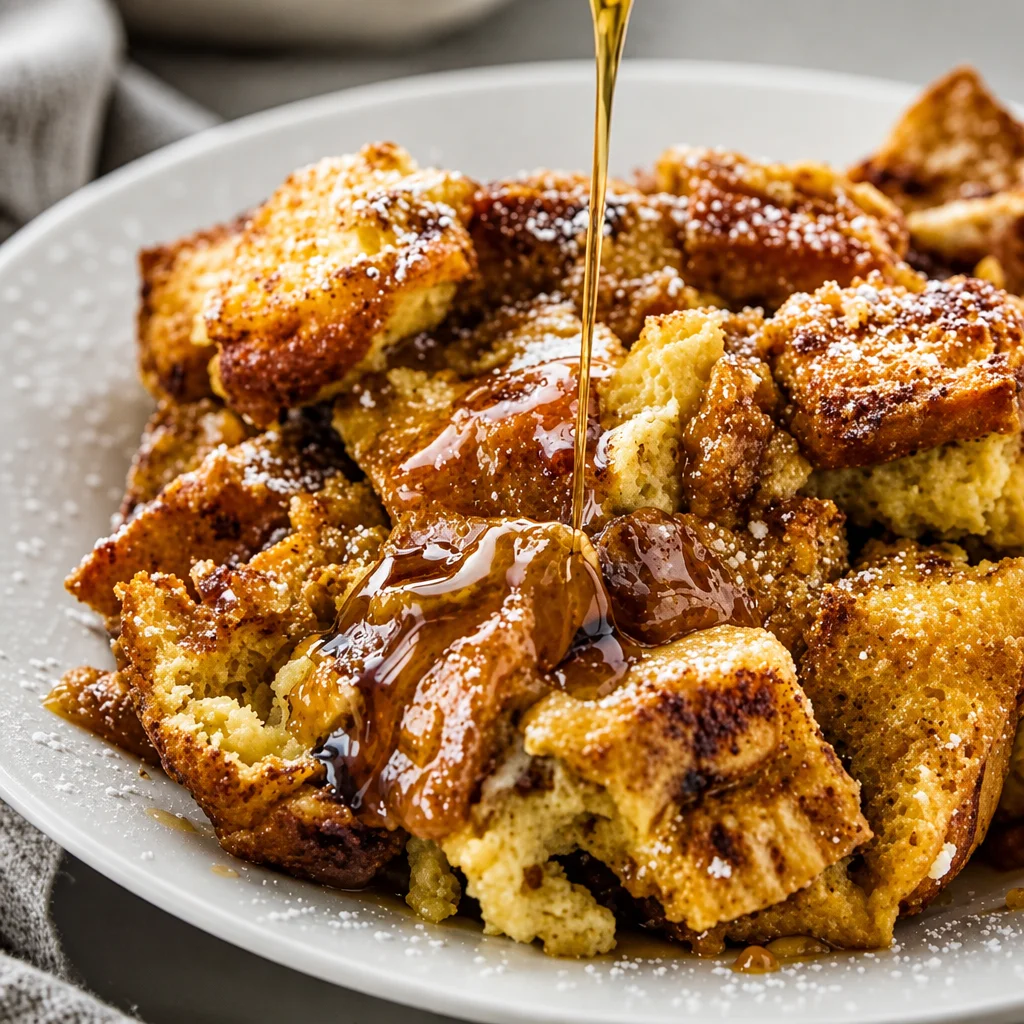
French Toast Casserole is my little trick for mornings when everybody’s hungry and nobody wants to wait. You know those days when the alarm feels personal, the coffee takes too long, and breakfast needs to just happen? This recipe is sweet, simple, and honestly hard to mess up. It’s the kind of cozy breakfast that makes the kitchen smell like cinnamon and vanilla without you standing at the stove flipping slices. If you can tear bread and whisk a bowl, you can make this.
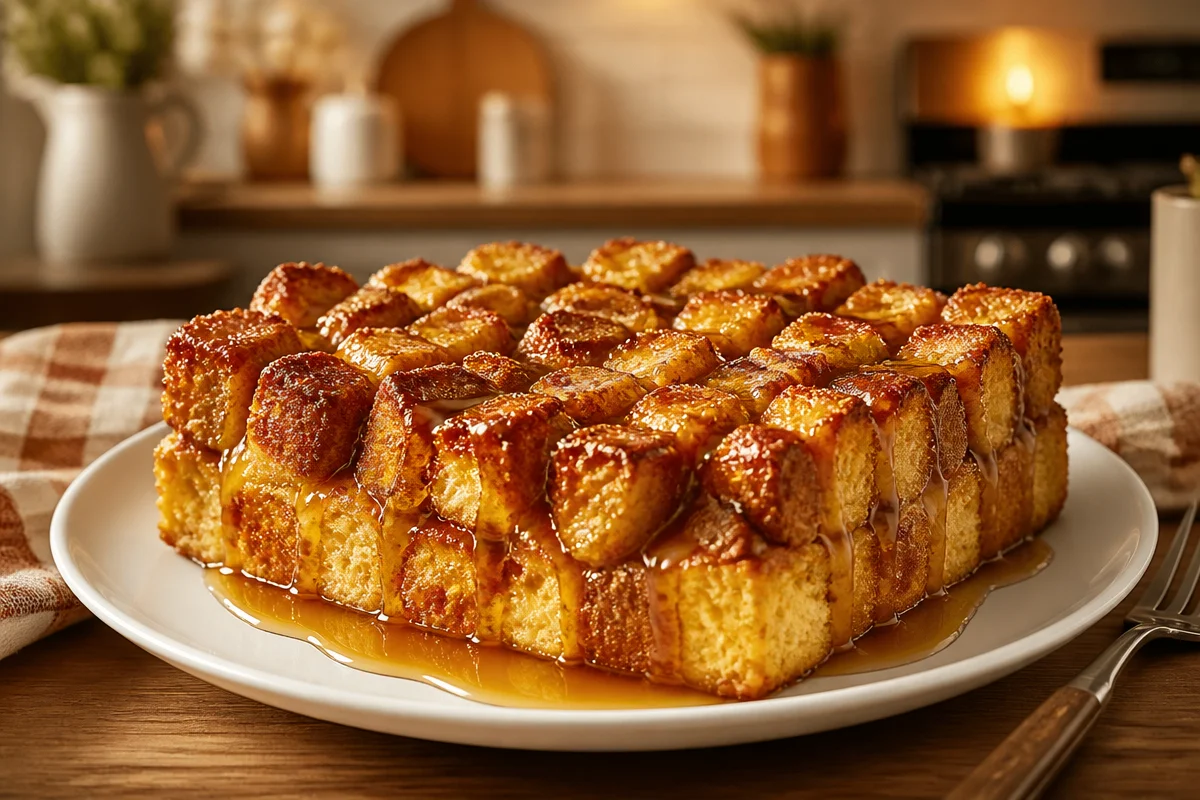
How to Make French Toast Casserole Step by Step
I’ve made this on school mornings, holiday mornings, and random Saturdays when I want something warm but not complicated. The best part is you’re basically letting the oven do the work while you deal with real life.
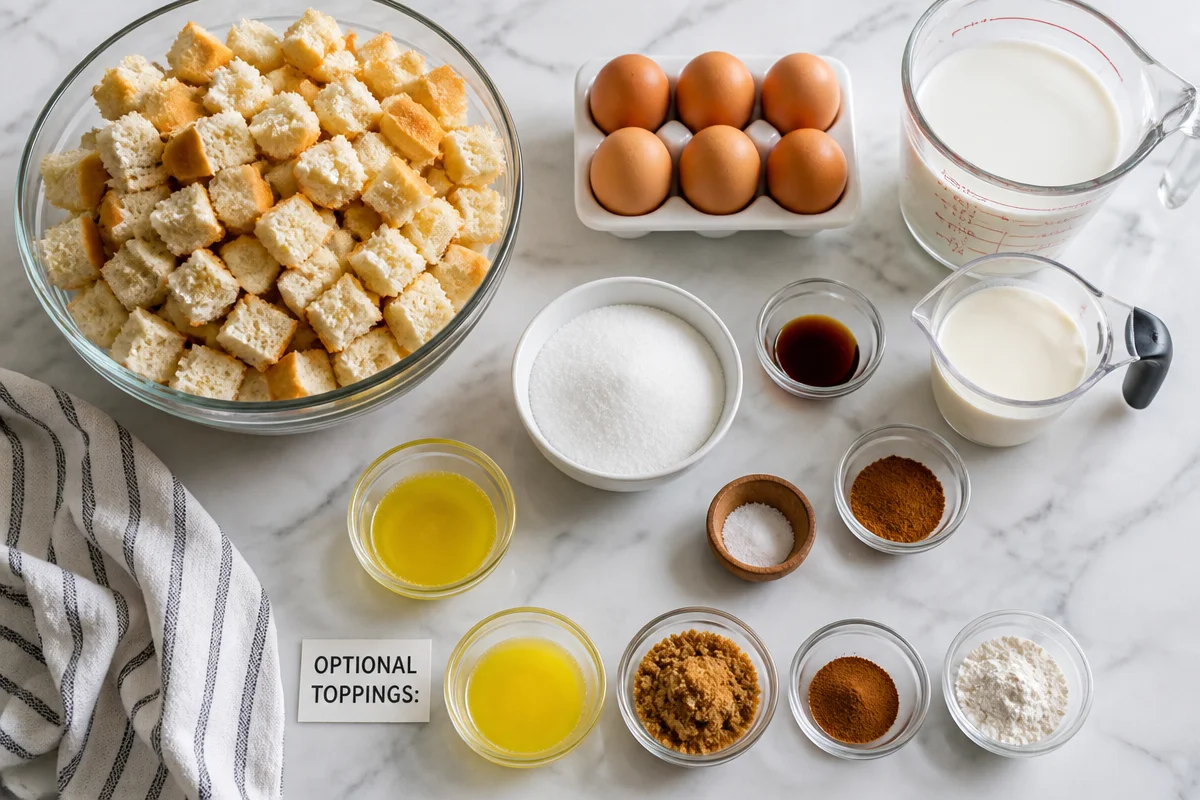
What you will need
- Bread, about 10 to 12 cups torn or cubed (see bread notes below)
- 6 large eggs
- 2 and 1/2 cups milk (whole milk is extra cozy, but any works)
- 1/2 cup heavy cream (optional, but makes it richer)
- 1/2 to 3/4 cup sugar (use less if you like it lightly sweet)
- 2 teaspoons vanilla extract
- 1 and 1/2 teaspoons cinnamon
- Pinch of salt
- 2 tablespoons melted butter for the dish
Optional topping (highly recommended if you want that bakery vibe):
- 3 tablespoons melted butter
- 1/3 cup brown sugar
- 1/2 teaspoon cinnamon
- 2 tablespoons flour (helps it go a little crumbly)
Directions (my no stress method)
1) Heat your oven to 350 F. Butter a 9×13 baking dish well. I mean it, get those corners.
2) Add the bread cubes to the dish. Spread them out so they’re not all clumped together.
3) In a big bowl, whisk eggs, milk, cream, sugar, vanilla, cinnamon, and salt. Whisk until it looks smooth and friendly, like a light tan color.
4) Pour the custard mix evenly over the bread. Press the bread down gently with a spoon so it soaks up the liquid.
5) If using the topping, stir together melted butter, brown sugar, cinnamon, and flour. Sprinkle it over the top in little bits.
6) Bake for about 40 to 50 minutes. It’s done when the center is set and the top is golden. If the top browns too fast, lay foil over it for the last 10 minutes.
7) Let it rest 10 minutes before slicing. This helps it hold together and not turn into bread pudding soup.
If you love cozy baked dishes like this, you might also be into this one for dinner: chicken and dressing casserole. Different vibe, same comfort factor.
Tips and Notes for Perfecting Your Casserole
I’ve learned a few things from making French Toast Casserole more times than I can count. These are the little details that take it from good to oh wow.
Let it soak: If you have time, let it sit 15 to 30 minutes before baking. If you’re doing an overnight version, even better. The bread absorbs more custard and you get fewer dry spots.
Press the bread down: This sounds silly, but it matters. After you pour the custard on, press the bread into it so it all gets coated.
Don’t overbake: You want the center set, not dry. The casserole keeps cooking a little after you pull it out.
Use a tasty mix-in: Sometimes I toss in a handful of chopped pecans or a few chocolate chips. Not every time, but it’s fun when you want a treat.
“I made this for a Sunday brunch and everyone asked for the recipe. The top was crisp, the inside was soft, and it didn’t feel heavy. I’m officially making it again next weekend.”
Quick serving note: I like this with warmed maple syrup, fresh berries, or just a dusting of powdered sugar. If you’re feeding people who love extras, put out a little toppings bar and watch them get excited.
Best Types of Bread for French Toast Casserole
This is where a lot of people accidentally go wrong, so let’s keep it simple. The best bread for French Toast Casserole is bread that can soak up the custard without turning to mush.
My favorite choices:
Brioche: Soft, buttery, and a little sweet. It feels like a special occasion even if it’s a Tuesday.
Challah: Similar to brioche, a little sturdier, and so good with cinnamon.
French bread: More chewy, less sweet, and it holds its shape really well.
What to avoid:
Super thin sandwich bread can work in a pinch, but it tends to get soggy fast. If that’s all you have, toast the cubes for 8 to 10 minutes first so they dry out a bit.
One more tip: slightly stale bread is perfect. If your bread is fresh and fluffy, just cube it and let it sit out on the counter for an hour. Or do the quick oven dry I mentioned.
And if you’re the kind of person who loves seasonal breakfast twists, you should check out pumpkin french toast breakfast too. It has that cozy fall flavor without much extra effort.
Make-Ahead and Storage Options
This is where French Toast Casserole really shines for busy mornings. You can prep it ahead, sleep like a normal person, and still serve something warm and homemade.
Overnight make-ahead
Assemble everything in the baking dish, cover it tightly, and refrigerate overnight. In the morning, set it on the counter while the oven preheats so the dish isn’t ice cold. Then bake as usual. Sometimes it takes 5 to 10 extra minutes if it’s very chilled.
Storing leftovers
Cover the dish or transfer slices to a container. It keeps well in the fridge for up to 4 days. I actually think it tastes great the next day, especially if you reheat it the right way.
Reheating:
For the best texture, warm it in the oven at 325 F for about 10 to 15 minutes. The microwave works too, but the topping won’t stay as crisp.
Freezing:
You can freeze slices. Wrap them well and freeze up to 2 months. Thaw overnight in the fridge and reheat in the oven. It’s a lifesaver when you want a quick breakfast that isn’t cereal.
Variations: Gluten Free and Dairy Free Alternatives
I love a flexible recipe, and French Toast Casserole is one of those. You can tweak it for allergies or preferences and still get that sweet, cozy result.
Gluten free: Use a sturdy gluten free loaf that you like the taste of. Some gluten free breads are very soft, so I suggest drying the cubes in the oven first. That helps the casserole set up instead of getting gummy.
Dairy free: Swap the milk for unsweetened almond milk, oat milk, or coconut milk beverage. For the cream, you can use more non dairy milk, or a dairy free creamer if you have one. Use melted coconut oil or a plant based butter for greasing the dish and for the topping.
Lower sugar: Cut the sugar back and rely on toppings like berries, sliced bananas, or a little maple syrup on the plate. It still tastes like a treat without being too sweet.
Extra flavor ideas: Add orange zest, a pinch of nutmeg, or a spoonful of brown sugar in the custard. Little changes, big payoff.
Common Questions
1) Can I make French Toast Casserole without letting it sit?
Yep. It’ll still work. If you can spare even 10 minutes, it helps, but you can bake it right away in a hurry.
2) How do I know when it’s done?
The center should look set, not jiggly, and a knife inserted near the middle should come out mostly clean. A little moisture is fine, raw egg is not.
3) Why is my casserole soggy?
Usually it’s the bread. Very fresh or thin bread can break down too much. Next time use sturdier bread or dry the cubes first, and make sure you bake until the center is set.
4) Can I add fruit?
Absolutely. Blueberries and sliced strawberries work great. If you use very juicy fruit, don’t go overboard or it can water things down.
5) What’s the best way to serve it for guests?
Bake it, let it rest, then slice into neat squares. Put out syrup, powdered sugar, and fruit. It looks like you worked harder than you did.
A cozy breakfast you will actually make again
If you need a real life breakfast that feels special but doesn’t wreck your morning, French Toast Casserole is it. You can prep it ahead, bake it while you get ready, and serve a warm pan that makes everyone happy. I keep coming back to it because it’s simple, flexible, and it tastes like comfort. If you want another solid reference point, I’ve also enjoyed reading French Toast Casserole – Belle of the Kitchen for extra ideas. Try it once, and I bet it ends up in your regular rotation.
French Toast Casserole

Ingredients
Main Ingredients
- 10 to 12 cups Bread, torn or cubed Best types include brioche, challah, or French bread.
- 6 large Eggs
- 2.5 cups Milk Whole milk is preferred for a richer texture.
- 0.5 cup Heavy cream Optional; adds richness.
- 0.5 to 0.75 cup Sugar Adjust according to sweetness preference.
- 2 teaspoons Vanilla extract
- 1.5 teaspoons Cinnamon
- 1 pinch Salt
- 2 tablespoons Melted butter for the dish
Optional Topping
- 3 tablespoons Melted butter For the topping.
- 0.33 cup Brown sugar
- 0.5 teaspoon Cinnamon
- 2 tablespoons Flour Helps to create a crumbly topping.
Instructions
Preparation
- Preheat your oven to 350°F (175°C). Butter a 9x13 baking dish generously.
- Add the torn or cubed bread to the dish, spreading it out to prevent clumping.
- In a large bowl, whisk together eggs, milk, heavy cream (if using), sugar, vanilla extract, cinnamon, and salt until smooth.
- Pour the custard mixture evenly over the bread, gently pressing down with a spoon to ensure the bread soaks up the liquid.
- If using the optional topping, mix melted butter, brown sugar, cinnamon, and flour together and sprinkle over the bread mixture.
- Bake for about 40 to 50 minutes until the center is set and the top is golden brown, covering with foil if it browns too quickly.
- Let it rest for 10 minutes before slicing to ensure it holds together.