
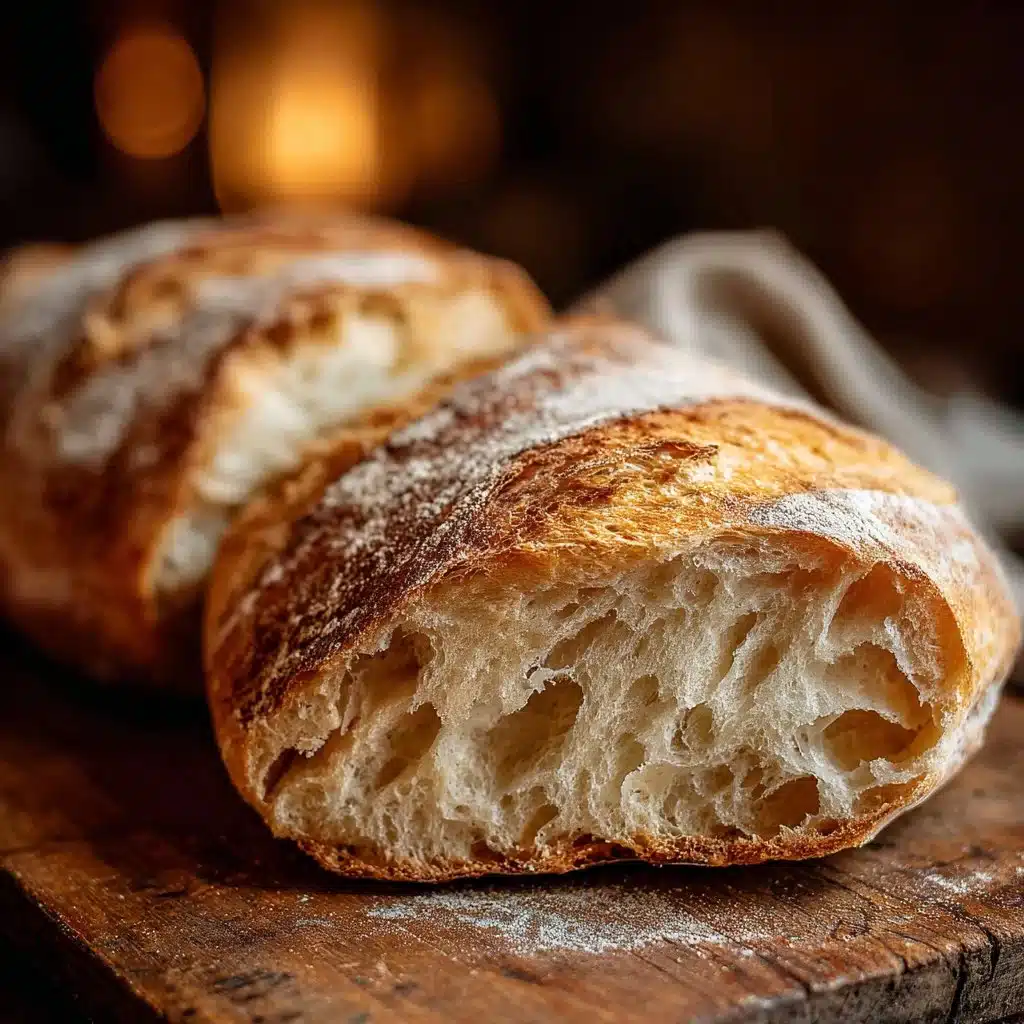
Homemade Ciabatta Bread smells like warm, toasty comfort and cracks into soft, airy crumbs. If you want a crusty loaf to dunk in soup or build hearty sandwiches, this recipe fits the bill. I keep steps friendly for busy cooks and families. If you enjoy bold bread ideas, try it after a fun twist like our air-fryer cheesy garlic bread — the crusty warmth is the same kind you’ll get here.
Why Make This Recipe
- Quick & rewarding: active time is short; the dough does much of the work.
- Family favorite: kids love tearing open the soft, holey inside.
- Budget-friendly: simple pantry ingredients give bakery-style bread.
- Versatile: great for sandwiches, dipping, or soup nights.
This ciabatta stands out for its open crumb and thin, crackly crust. The dough is wet and sticky, which gives those big, pillowy air pockets that feel cozy and satisfying. Baking this loaf brings warm smells through the kitchen and a small proud moment when you slice into a steaming, soft center. Try a cottage-cheese flatbread sometime for another light bread option: cottage-cheese flatbread.
Ingredients
For the dough:
- 3 1/4 cups (400 g) bread flour (see note below)
- 1 1/2 cups (360 ml) warm water (about 95–105°F / 35–40°C)
- 1 teaspoon instant yeast
- 2 teaspoons fine sea salt
- 1 tablespoon olive oil (plus extra for greasing)
- 1 teaspoon honey or sugar (optional, helps yeast start)
For dusting and baking:
- Extra flour or semolina for dusting the work surface
- Cornmeal or semolina for the baking sheet (optional)
Notes:
- Bread flour gives better chew and structure; all-purpose works in a pinch.
- Use instant yeast for faster mixing; active dry yeast works but dissolve it in water first.
How to Make Homemade Ciabatta Bread:
- Warm the water and mix in the yeast and honey. Let sit 2 minutes until slightly foamy. (Why: this wakes up the yeast so it starts acting right away.)
- In a large bowl, stir the flour and salt. Add the yeast water and olive oil. Mix until a very sticky, shaggy dough forms. (Tip: use a wooden spoon or dough whisk; no kneading machine needed.)
- Cover the bowl with plastic wrap or a damp towel. Let the dough rise at room temperature for 45–60 minutes, until slightly puffed. (Why: first rise builds flavor and gas for big holes.)
- Do three quick stretch-and-folds every 20 minutes over the next hour: wet your hand, pull one side of the dough up and fold it over, turn the bowl, repeat. (Why: this strengthens the dough without heavy kneading.)
- After the folds, cover and let the dough rest 30–45 minutes until doubled and bubbly.
- Dust a work surface with flour or semolina. Gently tip the dough onto it—do not deflate too much. Cut the dough into two pieces with a bench scraper. (Tip: handle gently to keep air pockets.)
- Shape each piece into a loose rectangle by folding edges under; place on a parchment-lined baking sheet dusted with semolina. Cover and proof 30–45 minutes until puffy.
- Meanwhile preheat the oven to 475°F (245°C). Place an empty metal baking pan on the bottom rack (for steam).
- Right before baking, pour 1 cup of hot water into the bottom pan to create steam, then quickly close the oven door. Bake the loaves for 18–22 minutes until golden brown and hollow-sounding. (Why: steam helps the crust form thin and crisp while the inside stays soft.)
- Let the bread cool on a rack for at least 20 minutes before slicing so the crumb sets.
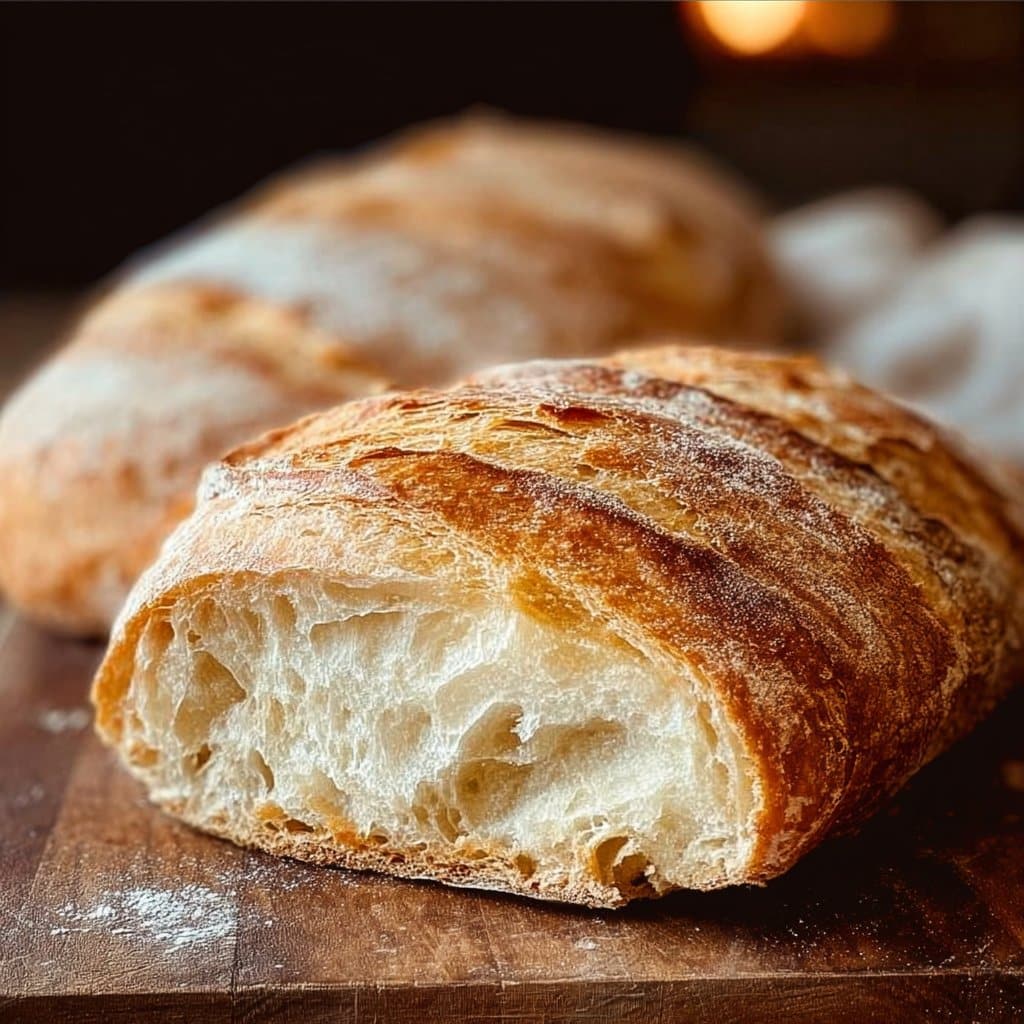
How to Serve Homemade Ciabatta Bread
- Tear warm slices and dip in olive oil mixed with a splash of balsamic and a pinch of salt.
- Use thick slices for open-faced sandwiches with roasted vegetables, mozzarella, or deli meats.
- Serve alongside soups or stews; the crust soaks up broth while the center stays tender.
How to Store Homemade Ciabatta Bread
- Short term: keep at room temperature in a paper bag or wrapped in a clean kitchen towel for up to 2 days. This keeps the crust crisper than plastic.
- Long term: slice and freeze in a freezer bag for up to 3 months. Toast or warm straight from frozen.
- Reheat: warm whole loaf in a 350°F oven for 10–15 minutes to refresh crust and heat the crumb. For slices, toast until golden.
Tips to Make Homemade Ciabatta Bread
- Use bread flour if you want bigger holes and more chew.
- Keep the dough wet—don’t add extra flour during mixing; high hydration creates the open crumb.
- Be gentle when shaping to keep bubbles intact.
- Add a quick steam in the oven for a thin, crisp crust.
- Let it cool before slicing to avoid a gummy center.
Variation
- Olive & Rosemary Ciabatta: fold in 1/2 cup chopped olives and 1 tablespoon chopped rosemary during the final gentle shaping.
- Gluten-free option: use a tested gluten-free bread flour blend and add 1 teaspoon xanthan gum; expect a different texture and smaller air pockets.
Can I use all-purpose flour instead of bread flour?
Yes. All-purpose works but gives a softer crust and smaller holes. Bread flour makes a chewier texture and larger crumb.
Why is my ciabatta dense instead of airy?
Your dough was likely under-hydrated, over-handled, or didn’t get enough rise. Keep it wet, fold gently, and let it proof until puffy.
Can I speed up the rise with more yeast?
You can add a bit more yeast, but faster rises give less flavor. For best taste, let it rise slowly at room temperature or refrigerate overnight for a deeper flavor.
Conclusion
Baking Homemade Ciabatta Bread fills your kitchen with warm, toasty smells and gives you a crusty loaf that’s soft inside—perfect for family meals and cozy nights. If you want another trusted recipe to compare techniques, check Homemade Ciabatta Bread – Sally’s Baking for extra tips and photos. Please leave a comment and a star rating if you try this at home, and share the result on Pinterest or Facebook so friends can enjoy it too. What twist did you try? Let us know below!

Homemade Ciabatta Bread

Ingredients
For the dough
- 3 1/4 cups 3 1/4 cups (400 g) bread flour Bread flour gives better chew and structure; all-purpose works in a pinch.
- 1 1/2 cups 1 1/2 cups (360 ml) warm water (about 95–105°F / 35–40°C) Warm water activates the yeast.
- 1 teaspoon 1 teaspoon instant yeast Use instant yeast for faster mixing; active dry yeast works but should be dissolved in water first.
- 2 teaspoons 2 teaspoons fine sea salt
- 1 tablespoon 1 tablespoon olive oil Plus extra for greasing.
- 1 teaspoon 1 teaspoon honey or sugar Optional; helps yeast start.
For dusting and baking
- 1 cups Extra flour or semolina for dusting the work surface
- Cornmeal or semolina for the baking sheet (optional)
Instructions
Preparation
- Warm the water and mix in the yeast and honey. Let sit for 2 minutes until slightly foamy.
- In a large bowl, stir the flour and salt. Add the yeast water and olive oil. Mix until a very sticky, shaggy dough forms.
- Cover the bowl with plastic wrap or a damp towel. Let the dough rise at room temperature for 45–60 minutes, until slightly puffed.
- Do three quick stretch-and-folds every 20 minutes over the next hour: wet your hand, pull one side of the dough up and fold it over, turn the bowl, and repeat.
- After the folds, cover and let the dough rest for 30–45 minutes until doubled and bubbly.
Baking
- Dust a work surface with flour or semolina. Gently tip the dough onto it—do not deflate too much. Cut the dough into two pieces with a bench scraper.
- Shape each piece into a loose rectangle by folding edges under; place on a parchment-lined baking sheet dusted with semolina. Cover and proof for 30–45 minutes until puffy.
- Preheat the oven to 475°F (245°C) and place an empty metal baking pan on the bottom rack (for steam).
- Right before baking, pour 1 cup of hot water into the bottom pan to create steam, then quickly close the oven door.
- Bake the loaves for 18–22 minutes until golden brown and hollow-sounding.
- Let the bread cool on a rack for at least 20 minutes before slicing.