
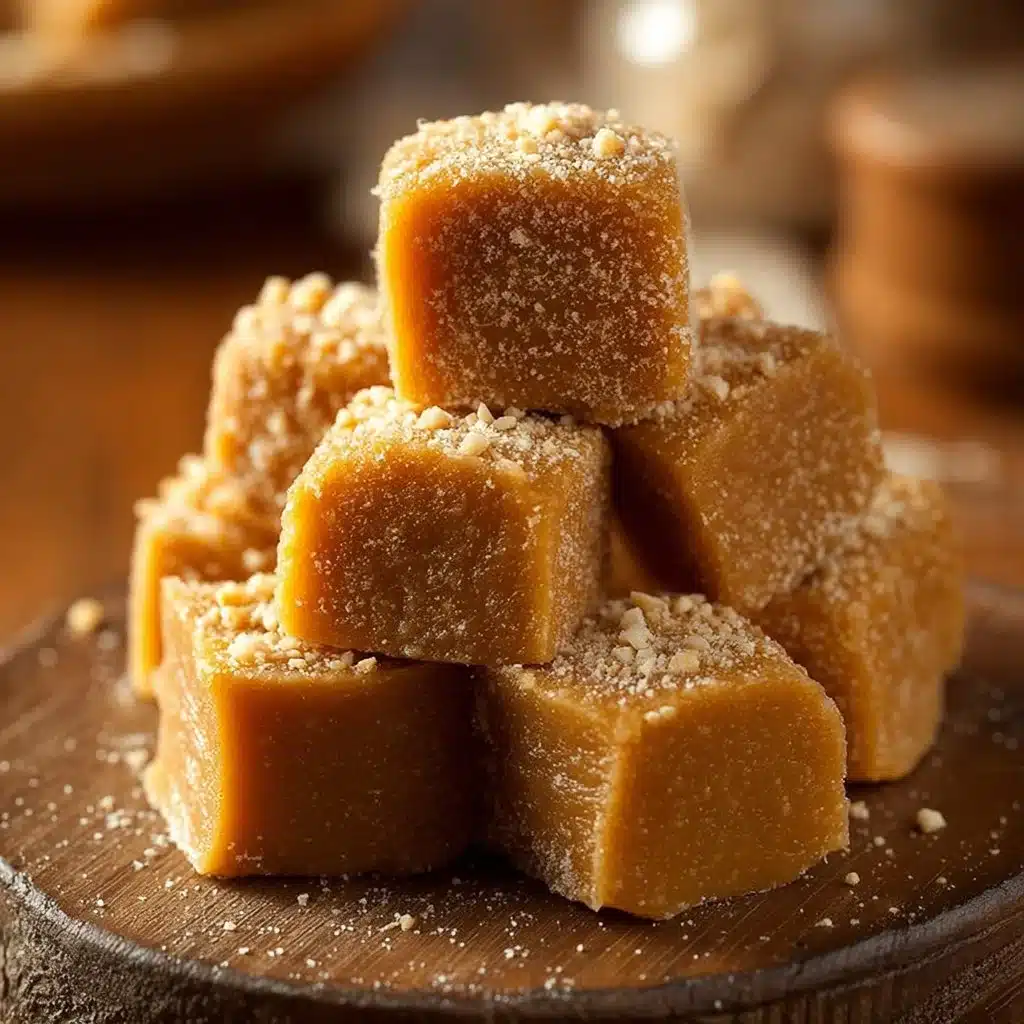
Brazilian Pacoca Candy arrives as a crisp, nutty confection that balances powdery crumble with warm roasted aroma. This pared-back sweet highlights toasted peanuts and a whisper of cassava, refined through simple technique. For a playful contrast on the dessert table, consider pairing it with a lighter, airy treat like our crispy cotton candy cheesecake bombs.
Why Make This Recipe
- Effortless Yet Elegant: quick to prepare with a food processor and minimal hands-on time.
- Minimal Ingredients: highlights quality peanuts and subtle seasoning.
- Impressive Flavor: concentrated peanut fragrance and clean, slightly sandy texture.
This version refines the traditional paçoca by controlling roast level and texture, producing a delicate, melt-in-the-mouth crumb rather than an overly sweet, greasy bar. The result feels artisanal and quietly sophisticated.
Ingredients:
Base
- 2 cups (about 300 g) roasted unsalted peanuts — skins removed for a clean color.
- 1/2 cup (100 g) granulated sugar — fine granulated for even blending.
- Pinch of fine sea salt.
Binder (optional for a firmer hold)
- 2 tablespoons toasted cassava flour (farinha de mandioca) — adds historic authenticity and light grainy texture.
Finishing
- 1 teaspoon unsalted butter, room temperature — for glossy cohesion (optional).
- Extra chopped roasted peanuts for garnish.
Precision notes: use cooled, room-temperature roasted peanuts; measure sugar by weight if possible; finely chop garnish peanuts for even texture.
How to Make Brazilian Pacoca Candy:
- Prepare the peanuts: if you bought raw nuts, roast at 170°C (340°F) for 10–12 minutes until golden and aromatic; cool completely. The aroma should be warm, nutty and slightly sweet.
- Pulse peanuts and sugar: add roasted peanuts and sugar to a food processor. Pulse in 10–15 short bursts. Watch for a sandy, slightly clumpy texture—do not overblend into oily butter.
- Mini-tip: scrape the bowl frequently to ensure even texture and prevent localized overheating.
- Add cassava flour and salt: sprinkle in the toasted cassava flour and a pinch of salt. Pulse 4–6 times until evenly distributed; the mixture should hold gently when pinched but crumble easily.
- Sensory cue: the mix should smell intensely of peanuts and feel dry to the touch with fine granules.
- Bind lightly (optional): if you prefer small molded pieces, add the room-temperature butter and pulse 3–4 times until the mix just begins to cohere. Stop before it turns glossy.
- Mini-tip: for molded bars, press firmly into a small square pan lined with parchment, then chill 20 minutes. Deglaze nothing here — instead, press to capture the dry, sandy profile.
- Finish and shape: for classic crumbly paçoca, spoon into paper candy cups and press lightly with the back of a spoon. For bars, unmold and slice with a sharp knife. Garnish with a sprinkle of chopped peanuts.
- Sensory cue: the finished candy should crumble softly on the tongue, releasing pure roasted-peanut flavor with a whisper of salt.
How to Serve Brazilian Pacoca Candy:
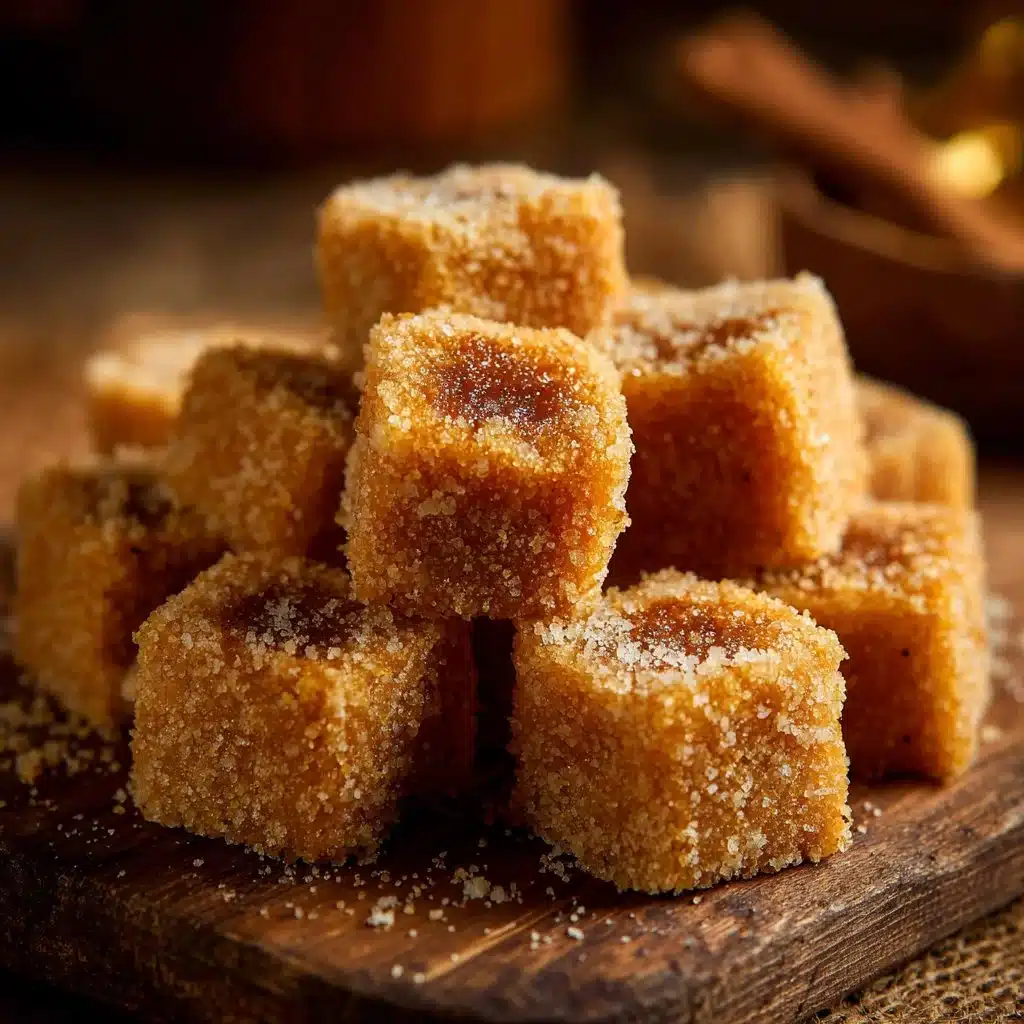
Serve paçoca in small paper cups on a porcelain platter for an understated presentation. For a refined contrast, place a single paçoca beside a small quenelle of citrus-macerated berries to cut the richness. Pair with a short espresso or a chilled tawny port for warmth and balance. For a modern dessert board, include tiny spoons of passionfruit curd and small chocolate shards.
Inspiration for pairing and textures is available in the dessert pairing notes of our crispy cotton candy cheesecake bombs article.
How to Store Brazilian Pacoca Candy:
Keep paçoca in an airtight container at room temperature away from heat and humidity; this preserves the dry, sandy texture. If you’ve molded bars, separate layers with parchment to prevent sticking. For longer storage, refrigerate in a sealed container for up to 2 weeks—bring to room temperature before serving to restore aroma. Avoid microwave reheating; instead, let chilled pieces sit 15–30 minutes to regain tenderness.
Tips to Make Brazilian Pacoca Candy:
- Roast evenly: use a single layer on a baking sheet and stir halfway through to develop an even nutty aroma.
- Pulse, don’t blend: short pulses prevent oil release and keep the classic crumbly texture.
- Taste as you go: adjust the pinch of salt to amplify peanut sweetness without oversalting.
- Use quality peanuts: the flavor depends entirely on the nut—freshly roasted American-style or Brazilian peanuts both work well.
Variation (if any):
- Chocolate-Infused Paçoca: fold in 2 tablespoons of cocoa nibs or 1 tablespoon of fine cocoa powder for a bitter-sweet axis.
- Almond or Hazelnut Paçoca: substitute equal parts toasted almonds or hazelnuts for a more refined, floral note.
- Soft Paçoca Log: add 2–3 tablespoons sweetened condensed milk while pulsing for a chewier, sliceable confection; chill before cutting.
FAQs
What makes paçoca different from peanut brittle?
Paçoca relies on a sand-like, crumbly texture made from ground peanuts and sometimes cassava flour, while peanut brittle is a hard, glassy sugar candy with whole or chopped nuts embedded.
Can I make paçoca without a food processor?
You can finely chop roasted peanuts and sugar together by hand, then rub with a fork to create a sandy texture, but achieving the uniform fineness and speed of a processor is difficult.
How long will homemade paçoca last?
Stored airtight at room temperature, paçoca keeps 1–2 weeks with little loss of texture; refrigeration extends it to about a month but requires tempering to room temperature before serving for best flavor.
Conclusion
Brazilian Pacoca Candy celebrates restraint: a few excellent ingredients, simple technique, and a focus on texture and pure peanut flavor. It reads as both rustic and considered, ideal for a refined confection course or intimate gift. For a clear reference to traditional proportions and variations, consult the detailed Paçoca (Brazilian Peanut Candy) recipe on Olivia’s Cuisine. Share your plating ideas or small adaptations in the comments — how would you make this dish your own?
Brazilian Pacoca Candy

Ingredients
Base
- 2 cups roasted unsalted peanuts skins removed for a clean color
- 1/2 cup granulated sugar fine granulated for even blending
- 1 pinch fine sea salt
Binder (optional for a firmer hold)
- 2 tablespoons toasted cassava flour (farinha de mandioca) adds historic authenticity and light grainy texture
Finishing
- 1 teaspoon unsalted butter room temperature for glossy cohesion (optional)
- to taste extra chopped roasted peanuts for garnish
Instructions
Preparation
- Roast raw peanuts at 170°C (340°F) for 10–12 minutes until golden and aromatic; cool completely.
- Add roasted peanuts and sugar to a food processor. Pulse in 10–15 short bursts until sandy and slightly clumpy; watch to not overblend.
- Sprinkle in toasted cassava flour and a pinch of salt. Pulse 4–6 times until evenly distributed; the mixture should hold gently when pinched but crumble easily.
- If preferred, add room-temperature butter and pulse 3–4 times for small molded pieces.
Finishing
- Spoon into paper candy cups and press lightly with the back of a spoon for classic crumbly paçoca. For bars, unmold and slice with a sharp knife.
- Garnish with chopped peanuts before serving.