
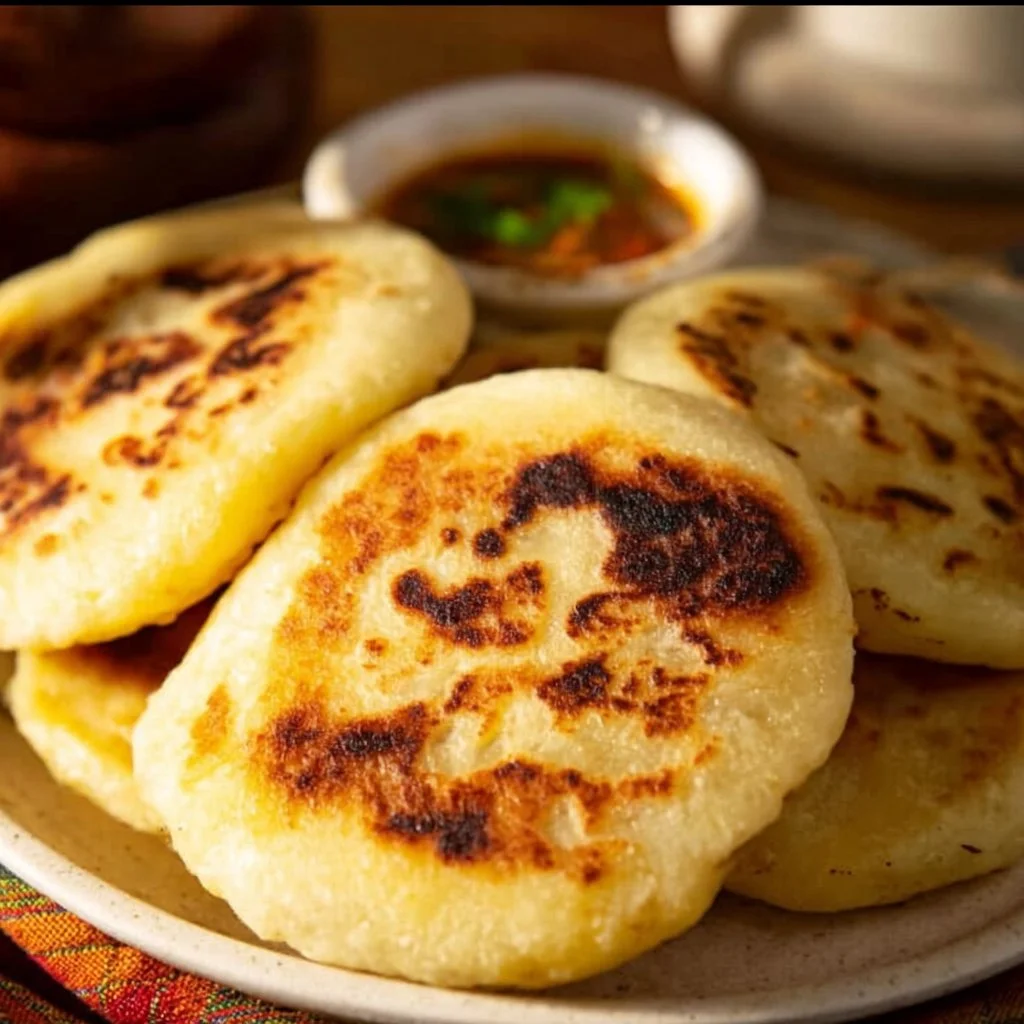
Authentic Salvadoran Pupusas bring warm, cheesy comfort to your kitchen in a fun, hands-on way. This simple recipe shows you how to make soft corn pockets filled with melty cheese, savory beans, or pork. You’ll love the smell of fresh masa and toasted edges as they cook. Make these for a cozy family meal, a weekend project with kids, or a dish that brings a bit of home and comfort to your table.
Why Make This Recipe
- Quick & easy: simple pantry ingredients and straightforward steps.
- Family favorite: kids love the gooey cheese and adults enjoy the warm, savory bites.
- Budget-friendly: masa, beans, and cheese give big flavor for little money.
- Hands-on and fun: shaping and filling pupusas is a warm, shared kitchen activity.
This recipe stands out because it gives you soft, slightly crisp corn cakes with melty filling and bright curtido on the side. The warm, nostalgic smell and comforting texture make each bite satisfying and cozy.
Ingredients
For the dough:
- 3 cups masa harina (corn flour for tortillas; not cornmeal)
- 2 to 2 1/2 cups warm water (start with 2 cups)
- 1 teaspoon salt
- 1 tablespoon vegetable oil (optional, for a softer dough)
For the fillings:
- 2 cups shredded cheese (quesillo, mozzarella, or a mild melting cheese)
- 1 1/2 cups refried beans (smooth)
- 1 cup cooked pork, finely chopped or shredded (optional, for revuelta)
- 1/4 cup chopped loroco or other herb (optional)
For serving:
- Curtido (pickled cabbage slaw) — store-bought or homemade
- Salsa roja or tomato sauce, warmed
Notes: Use warm water to hydrate the masa easily. If you can’t find quesillo, use low-moisture mozzarella.
How to Make Authentic Salvadoran Pupusas
- Prepare fillings first: warm refried beans, shred cheese, and mix pork with a little salt if using. This makes filling and assembly faster.
- Tip: Warm fillings slightly so cheese melts quickly inside the dough.
- Mix the dough: in a bowl combine masa harina and salt. Add 2 cups warm water a little at a time and mix until a soft, slightly tacky dough forms. Add up to 1/2 cup more water if it feels dry.
- Why this matters: the dough should feel like soft Play-Doh — not crumbly or sticky.
- Rest the dough: cover the bowl with a damp towel and let it rest for 10–15 minutes. This hydrates the masa and makes it easier to shape.
- Divide the dough: roll the dough into golf-ball sized balls (about 12–14). Flatten each ball into a thick disc with your hands.
- Fill each pupusa: place about 1-2 tablespoons of filling (cheese alone, beans alone, or a mix) in the center of a disc. Fold the edges over the filling and gently press to seal, then flatten into a 1/2-inch thick round. Keep your hands damp to prevent sticking.
- Mini-tip: Don’t overfill — it helps the pupusa seal and cook evenly.
- Preheat a griddle or large skillet over medium-high heat. Lightly oil the surface or brush with a thin layer of oil.
- Cook the pupusas: place each pupusa on the hot griddle. Cook 3–4 minutes per side, until golden brown spots form and a bit of steam escapes from the edges. Press gently with a spatula once while cooking to keep them flat.
- Sensory note: you’ll smell toasted corn and melted cheese as they cook; the edges should be slightly crisp and the center warm and soft.
- Rest briefly: transfer cooked pupusas to a plate and let them rest 2 minutes before serving so the cheese sets a little.
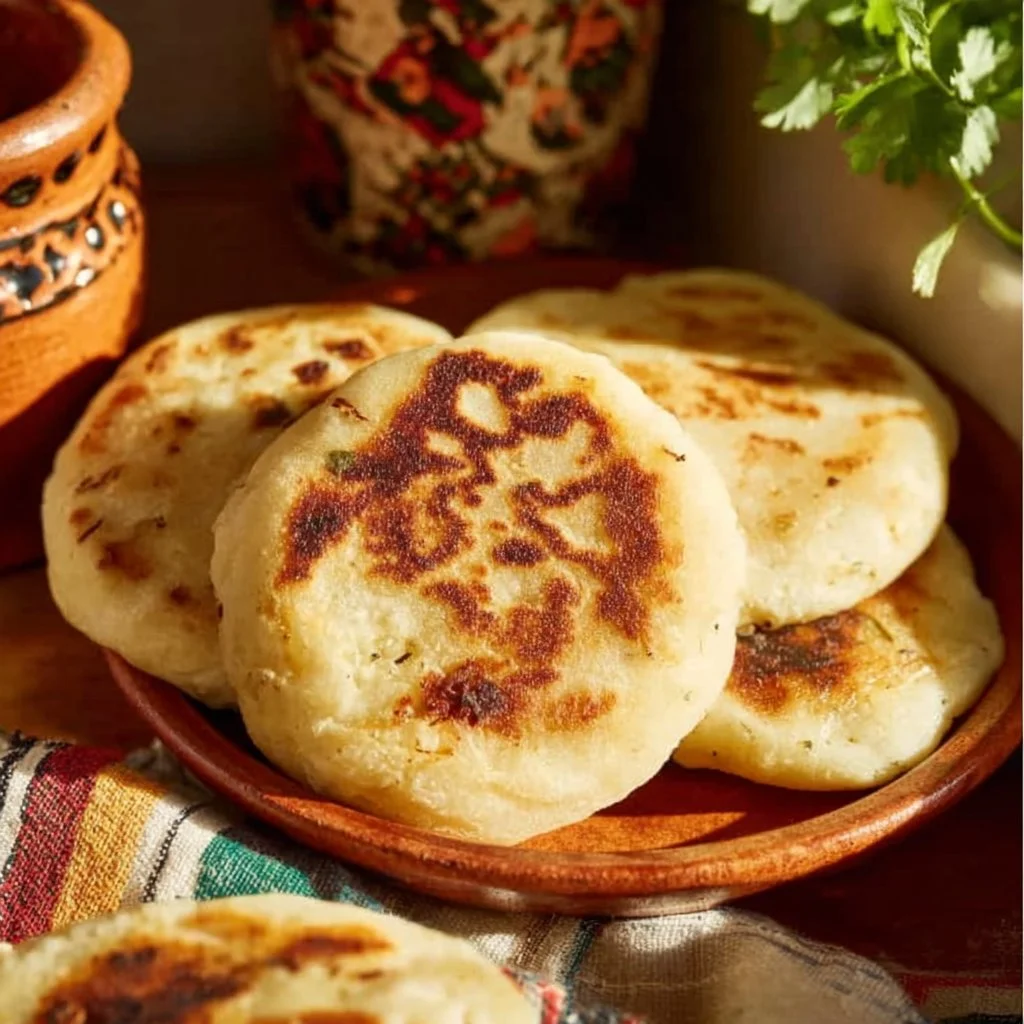
How to Serve Authentic Salvadoran Pupusas
- Serve hot with curtido piled on top and a spoonful of warm salsa roja beside each pupusa.
- Cut into halves or quarters and arrange on a warm plate; garnish with a lime wedge for a little bright acidity.
- Pair with simple sides like black beans, rice, or a fresh green salad for a fuller meal.
How to Store Authentic Salvadoran Pupusas
- Refrigerator: cool completely, then store in an airtight container for up to 3–4 days. Reheat in a skillet over medium heat to keep edges crisp.
- Freezer: place cooled, uncooked pupusas on a tray to freeze solid, then transfer to a freezer bag for up to 2 months. Cook from frozen, adding a minute or two per side.
- Microwave reheat: cover loosely and microwave 30–60 seconds, then finish in a hot skillet for crispness.
Tips to Make Authentic Salvadoran Pupusas
- Test one pupusa first to check filling amount and cooking time.
- Keep your hands or a small bowl of water nearby to stop dough from sticking.
- Don’t overfill — that causes tears and leaks.
- Cook on medium heat so the inside cooks before the outside over-browns.
Variation
- Gluten-free: use certified gluten-free masa harina (most corn masa is naturally gluten-free).
- Vegetarian/vegan: make cheese-and-bean pupusas, or use mashed sweet potato and vegan cheese for a dairy-free option.
Can I use regular cornmeal instead of masa harina?
No. Regular cornmeal is coarser and won’t bind the dough. Use masa harina labeled for tortillas or tamales for the right texture.
How do I stop pupusas from cracking when I seal them?
Make sure the dough is well-hydrated and rested so it’s pliable. Keep your hands slightly damp when sealing and avoid overfilling.
Can I make pupusas ahead and freeze them?
Yes. Freeze uncooked, formed pupusas on a tray until firm, then transfer to a freezer bag. Cook from frozen, adding a minute or two per side.
Conclusion
These Authentic Salvadoran Pupusas make for a warm, comforting meal that feels like family. The light corn aroma, the soft inside, and the crisp, golden edges offer a little celebration in every bite. Leave a comment and a star rating to tell others how they turned out, and pin or share the recipe on Pinterest or Facebook to spread the joy. For a classic reference and extra tips, see Authentic Salvadorean Pupusas Recipe – Food.com. What twist did you try? Let us know below!
Pupusas

Ingredients
For the dough
- 3 cups masa harina (corn flour for tortillas; not cornmeal)
- 2-2.5 cups warm water Start with 2 cups
- 1 teaspoon salt
- 1 tablespoon vegetable oil Optional, for a softer dough
For the fillings
- 2 cups shredded cheese (quesillo, mozzarella, or a mild melting cheese)
- 1.5 cups refried beans Smooth
- 1 cup cooked pork, finely chopped or shredded Optional, for revuelta
- 1/4 cup chopped loroco or other herb Optional
For serving
- Curtido (pickled cabbage slaw) — store-bought or homemade
- Salsa roja or tomato sauce, warmed
Instructions
Preparation
- Prepare fillings first: warm refried beans, shred cheese, and mix pork with a little salt if using.
- In a bowl, combine masa harina and salt. Add 2 cups warm water a little at a time and mix until a soft, slightly tacky dough forms. Add up to 1/2 cup more water if it feels dry.
- Cover the bowl with a damp towel and let it rest for 10-15 minutes.
Shaping and Filling
- Roll the dough into golf-ball sized balls (about 12-14). Flatten each ball into a thick disc with your hands.
- Place about 1-2 tablespoons of filling in the center of a disc, fold the edges over the filling, and gently press to seal, then flatten into a 1/2-inch thick round.
- Keep your hands damp to prevent sticking.
Cooking
- Preheat a griddle or large skillet over medium-high heat and lightly oil the surface.
- Cook each pupusa for 3-4 minutes per side, until golden brown spots form.
- Transfer cooked pupusas to a plate and let them rest for 2 minutes before serving.
Serving
- Serve hot with curtido piled on top and a spoonful of warm salsa roja beside each pupusa.
- Cut into halves or quarters and arrange on a warm plate; garnish with a lime wedge.